


The Palace of the Borja family in Gandia is a legacy of power and mystery. In the heart of the city, near the narrow streets of the old town, stands an extraordinary monument – the Palau Ducal dels Borja, or the Palace of the Dukes of Borja. Although today it attracts crowds of tourists with its architecture and beautiful interiors, its walls hide stories of one of the most influential yet controversial families in European history. We are talking about the Borjas – also known as the Borgias – a family that shaped the fates of Spain, Italy, and even all of Christianity from the Middle Ages to the Renaissance.
Origins – where did the Borgias come from?
The Borja family originates from a small Aragonese village called Borja, located in today’s Spanish province of Zaragoza. Their surname (Spanish: Borja, Italian: Borgia) comes from this locality. At the turn of the 13th and 14th centuries, the family moved to the Kingdom of Valencia, which had recently been reclaimed from the Moors and offered numerous opportunities for social advancement. It was here that their brilliant march towards power began.
Gandia played a key role in this story – it became the seat of one branch of the Borja family and the place where they began to build their legacy. However, it was not an ordinary estate – it was here that the Borjas began to transform from local nobility into European giants.
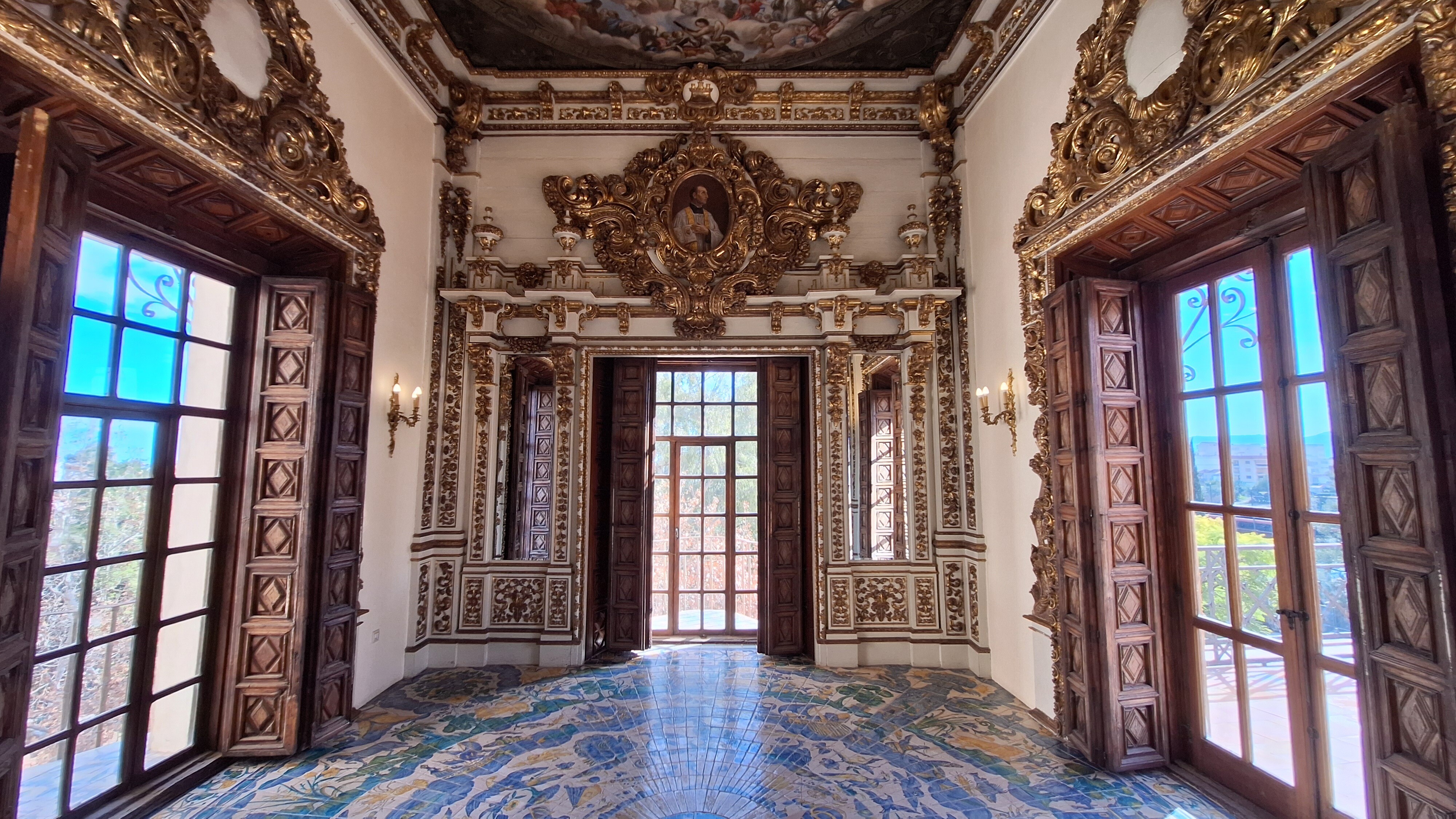
Palau Ducal dels Borja – a pearl of architecture and a witness to history
The ducal palace in Gandiahttps://maps.app.goo.gl/cx1sB5vwhnejdKRz7is one of the best-preserved Renaissance palaces in Spain. It was built in the 14th century, and its greatest flourishing occurred in the 15th and 16th centuries when the Borjas reached the peak of their power. The very facade of the building delights with Gothic details and coats of arms, but the true treasures are hidden inside.
The Golden Room (Sala Dorada), the Coronation Hall, and the Chapel of the Saints – each of these rooms tells a different story. The palace was not just a residence – it was a center of culture, politics, and religion. Archbishops, dignitaries, and artists were hosted here, and Gandia itself – thanks to the patronage of the Borjas – became an important center of learning and art.
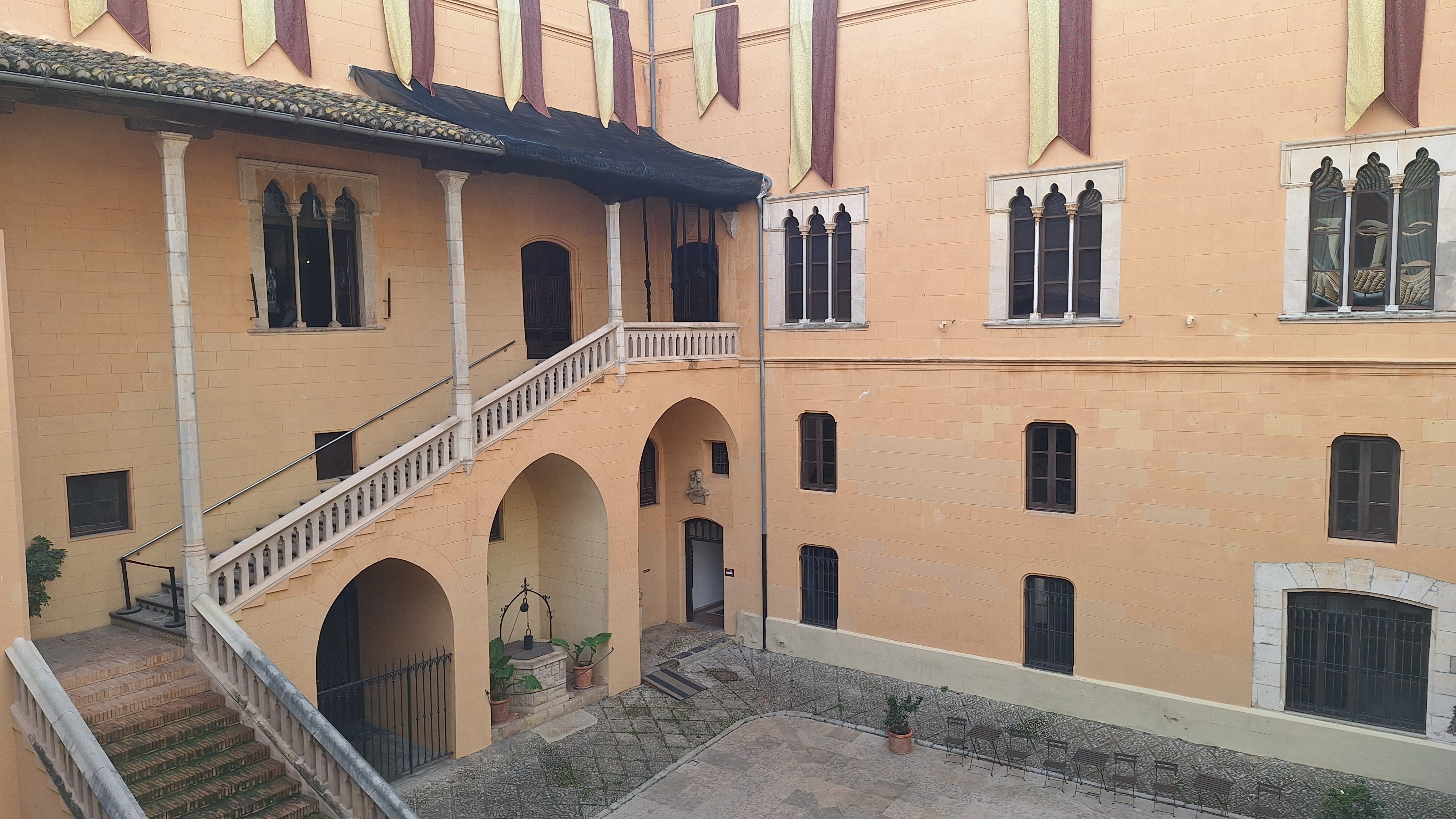
The most famous Borjas – popes, dukes, and legends
The Borja family forever inscribed itself in the annals of history thanks to two figures who reached the highest position in the Catholic Church.
1. Alfonso de Borja – Pope Callixtus III (1378–1458) Born in Xàtiva, near Gandia, Alfonso was a brilliant lawyer and diplomat. Thanks to his skills, he gained the favor of kings and cardinals, and in 1455 he was elected pope as Callixtus III. He initiated the rehabilitation of Joan of Arc and attempted to organize a crusade against the Turks after the capture of Constantinople.
2. Rodrigo de Borja – Pope Alexander VI (1431–1503) The famous (or rather infamous) Renaissance pope-emperor. Although he was a patron of the arts and a powerful politician, his pontificate was marked by corruption, nepotism, and intrigue. It is thanks to him that the significance of the Borjas in Italy grew and the "papal dynasty" was established. His children – Cesare and Lucrezia Borgia – became the protagonists of countless legends and novels, often very colorful, though not always faithful to the facts.
Gandia – the spiritual capital of the Borjas
Although the Italian branch of the Borgia family overshadowed its Spanish roots with its fame, it was Gandia that remained the spiritual home of the Borjas. In 1485, Pedro Luis de Borja, the son of Alexander VI, became the first Duke of Gandia, and this title became hereditary. The family transformed the city into a model Renaissance center – with a university, a printing house, a collegiate church, and a rich cultural life.
Another distinguished representative of the family was St. Francis Borgia (1510–1572), the great-grandson of Alexander VI, who after the death of his wife abandoned the life of an aristocrat and joined the Jesuit order. Over time, he became its general and one of the most prominent spiritual leaders of the Counter-Reformation. In 1671, he was canonized by Pope Clement X.

Trivia and legends
-
The Borja family coat of armsdepicts a bull (buey in Spanish), which is a play on words with the surname Borja. This symbol can be found on many buildings in Gandia.
-
The palace had its own printing house, where religious and scientific books were already published in the 15th century – which was an extraordinary achievement for that time.
-
Lucrezia Borgia, often portrayed as a femme fatale, was probably a victim of the political intrigues of her father and brother, rather than their accomplice. Historians are increasingly rehabilitating her figure.
-
The modern city of Gandiaoften organizes festivals and exhibitions dedicated to the Borjas, and the palace can be visited with a guide or independently, using interactive routes.
The Borjas today – more than just Netflix
Thanks to series and books, the Borja family (Borgia) has once again found itself in the spotlight. Although they are often portrayed as schemers and degenerates, their true history is a much richer tale – one of social advancement, political skill, religious zeal, and a tremendous influence on the history of Europe.
Today, the name Borja still exists in Spain and South America – both as a surname and a first name. And Gandia, though not a metropolis today, remains a proud guardian of this extraordinary legacy. The Borja Palace in Gandia is not just a place – it is a story. It is an encounter with a history that shaped Europe and whose echoes can still be heard today.
700 years of history of European giants
ABOUT US
Alicja and Hubert
In love with Gandia at first sight. You will learn more from our social media.
MENU
ADDRESS
Passeig Marítim de Neptú, Gandia, Spain
+34 643 701 773
+48 502 877 488
+48 533 447 575
CONTACT FORM
Legal note:
All content published on this website and on Facebook and Instagram profiles (texts, photos, descriptions, offers, etc.) is protected by law under the provisions of the Act of February 4, 1994, on Copyright and Related Rights (consolidated text from 2006, Journal of Laws No. 90, item 631 as amended). Without the author's consent, it is prohibited to reproduce content, copy it, reprint it, store it, and process it using any electronic means, both in whole and in part.
Further distribution, as referred to in Article 25, paragraph 1, point b of the Act of February 4, 1994, on Copyright and Related Rights, is prohibited.
Copying, processing, or distributing these materials in whole or in part without the author's consent is prohibited.
The author consents to the sharing of content on social media for the purpose of promoting the apartment.